Luke Frost


Luke Frost Essays


Luke Frost Essays

Tate St Ives Catalogue
Foreword By Sara Hughes / Martin Clark

Matthew Collings
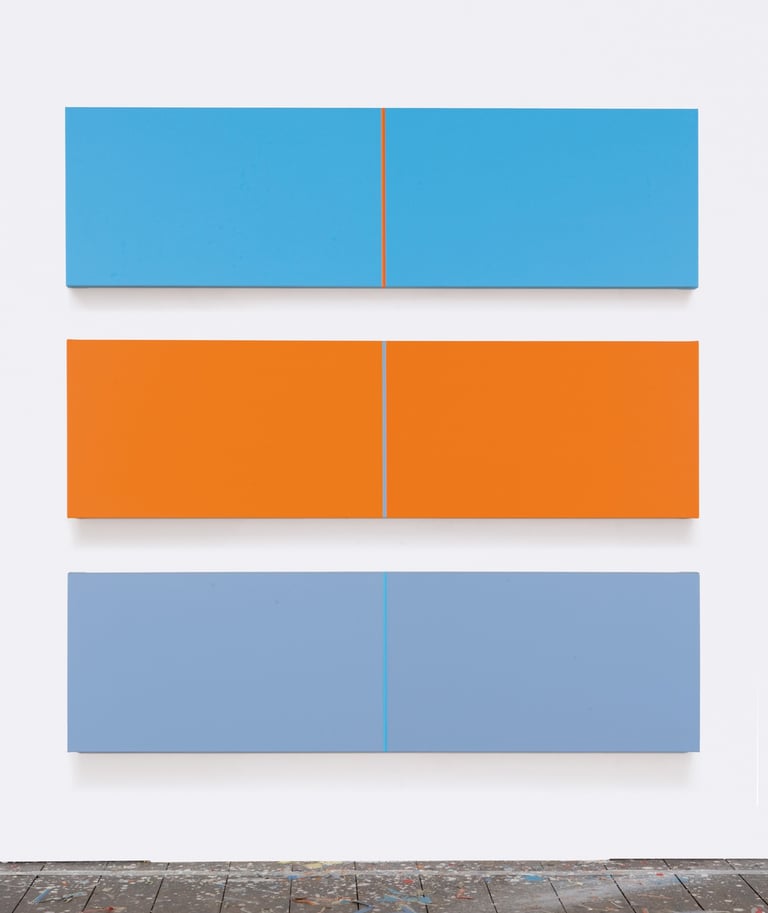
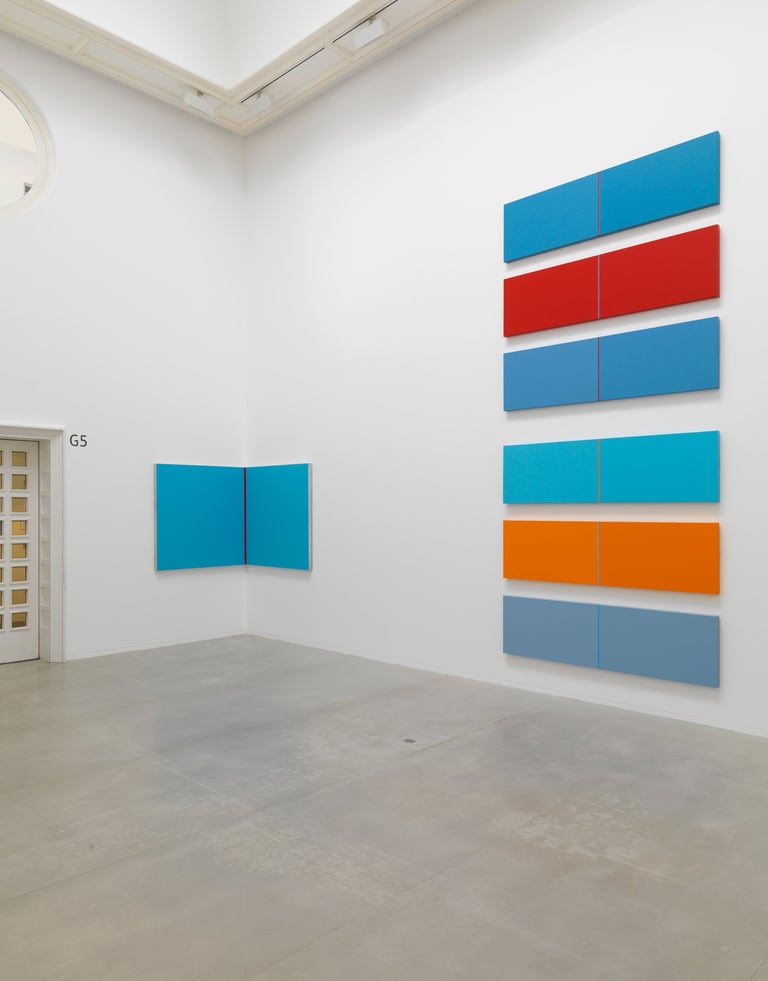
The facts. Big paintings -- diptychs (two big squares) -- triptychs (three horizontal long narrow sections) -- small cardboard ones that look like tryouts but have a charm of their own -- plus a right-angle structure using metal instead of canvas. >>>>

Tony Godfrey
A cursory glance at one of Luke Frost's paintings may well lead us to the mistaken assumption that these are paintings like those made long ago in the Sixties: very flat, abstract paintings concerned with formalist issues only. But this is far from the case: a more thoughtful and responsive walk towards them (notice: no passing glance this) will discover that these are not formalist paintings at all, indeed so far are they not in thrall to flatness that they are (as I shall explain) in fact not two dimensional at all, but operative in at least five dimensions. >>>>

Susan Daniel - McElroy
The pristine surfaces of these architectonic paintings bear the hallmarks of American post - Abstraction and conceptual practice as they nod in the direction of Barnett Newman and the minimalist sculpture Dan Flavin; but there the affinity of both artists ends. Up to ten layers of paint - dependent upon Luke Frost's selection of colour tone - results in a surface that recedes into sometimes deep, sometimes shallow, recessive space. >>>>

Peter Davies
Since the millennium he has exhibited with increasing regularity both locally and in the metropolis, a situation reminding us of Viv Lawes' observation in the 'Guardian' newspaper of an art " absorbed by the changing light and its interaction with the countryside" on the one hand and one that is "rigorously intellectual and urban" on the other. >>>>

 
t1   
Home | Selected Works | Tate St Ives 2009 | Studio | Prints | Biog/CV | Exhibitions | Essays | Contacts


Design © NetPZ 2008 & Luke Frost

Site Map